Why a Window Turns the Same Wall into Several Colours
See why window light changes a wall’s apparent colour and use a simple observation exercise to compare its shifting tones through the day.
The common mistake with changing wall colour is to assume the paint itself has changed; the cost is choosing a new colour to solve a problem caused by the light. A window can make one wall appear warmer, cooler, brighter or duller as daylight shifts, even though the surface stays still. To understand why a window turns the same wall into several colours, look at the light arriving there as well as the paint.
What does the window change?
A painted wall reflects some of the light that reaches it and absorbs the rest. The colour you see is therefore not simply a fixed property of the paint: it is the result of the surface, the incoming light and the surrounding conditions working together.
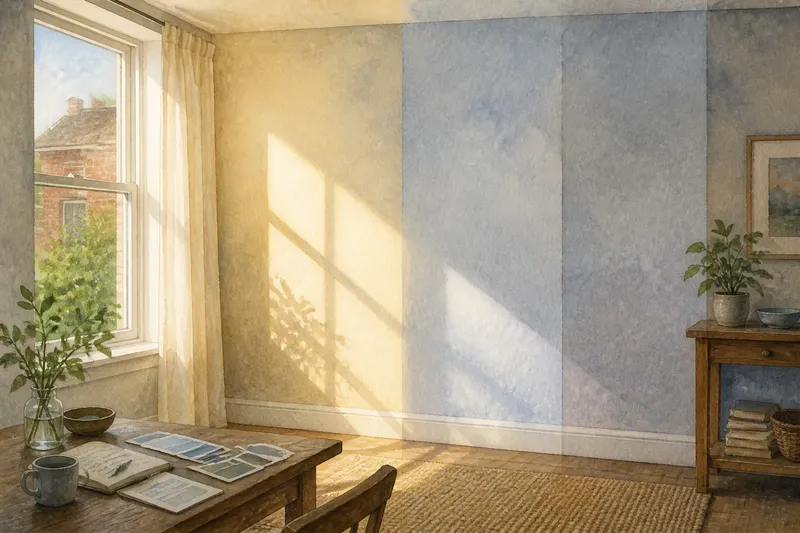
Daylight changes in both direction and quality. The sun moves across the sky, clouds soften or interrupt its light, and nearby buildings or trees can affect what enters a window. A sunlit patch may look vivid and warm, while the same paint in shade can seem quieter or cooler. These are changes in appearance, not necessarily in the wall’s actual colour.
Angle matters because light arriving from the side can emphasise the wall’s surface. Small ridges, brush marks and unevenness cast delicate shadows, creating areas that seem darker or less even. Light striking more directly tends to reduce those shadows, though glare can make a patch hard to judge. A smooth, matte surface and a slightly textured one may therefore appear different under the same window light.
Nearby colours matter too. A green garden, a red brick wall or a pale curtain can reflect light into the room. The wall may pick up a subtle cast from that reflected light, especially near the window. What looks like a change in paint can partly be a change in the light’s surroundings.
Which light should you compare?
There are three useful approaches to observing a wall. Each answers a different question: how the colour responds to direct sun, how it behaves in soft daylight, or how much the surrounding room affects it. You do not need to judge every condition at once.
Direct sunlight: does the colour become more vivid?
When a beam reaches the wall, the illuminated area often looks brighter and may seem warmer. Strong light can also wash out detail, so the apparent colour may look less rich than it does in softer conditions. This approach suits anyone deciding whether a bright room makes a particular wall feel too intense.
Watch where the sunlit area falls rather than treating the whole wall as one sample. A corner touched by direct sun can look quite unlike the section beside it. If the beam moves across the room, the boundary between light and shade also moves, making the contrast easy to notice.
Soft daylight: does the wall look more even?
Cloud cover, indirect light and a window without direct sun can produce gentler illumination. The wall may appear more even, with fewer sharp shadows, although it can also seem less bright. This is a useful condition for judging the colour over a larger area, particularly if the room is often used during overcast daylight.
Soft light is not automatically neutral. The sky, nearby surfaces and the direction of the window still shape what reaches the wall. Treat it as one distinct viewing condition, not as a definitive version of the paint.
Reflected light: does the room lend the wall a cast?
Light bounced from a coloured surface can subtly alter the appearance of a nearby wall. A curtain, rug or exterior view may contribute a tint, while a white surface can bounce light back without an obvious strong colour. This approach suits someone trying to understand why a wall near one window looks different from another wall painted the same way.
To inspect the effect, compare a section close to the window with one farther away, then notice what sits opposite each area. Avoid deciding from a single glance: reflected colour can be delicate, and the wall’s own shade or texture may also contribute.
How can you observe one wall at different times?
Choose a wall that receives changing daylight and observe it in the same place through the day. The aim is not to produce a perfect colour record, but to notice what changes and under which conditions. Keep the room’s lamps switched off during the observation so that you are comparing daylight with daylight rather than mixing light sources.
- Choose a stable viewpoint. Stand in the same spot and look at the same section of wall. This reduces changes caused by viewing the surface from a different angle.
- Note the conditions. Record whether direct sun reaches the wall, whether the sky is bright or cloudy, and whether a curtain or blind is open. A brief note is enough.
- Describe appearance rather than naming a new paint colour. Try words such as warmer, greyer, brighter, flatter or more shadowed. These descriptions help separate a lighting effect from a paint choice.
- Compare near and far areas. Look at one section close to the window and another farther into the room. Notice whether their difference changes as daylight shifts.
- Repeat under a contrasting condition. If the first observation was in direct sun, compare it later when the wall is in shade or the sky is overcast. Keep the viewpoint and section the same.
Say you are considering whether a pale blue wall looks too cold. In the morning, you notice a strong patch of sun that makes part of it seem bright; later, under cloudy light, the same section looks softer and greyer. The useful result is not a verdict about the paint, but a clearer sense that the room’s changing daylight contributes to the impression.
How should you choose between the viewing conditions?
Match the observation to the decision you need to make. If you are concerned about a wall looking overpowering during a sunny spell, direct sunlight is the relevant condition. If you want to know how the wall reads across an ordinary, softer day, observe indirect or cloudy daylight. If only one corner seems oddly tinted, pay attention to reflected light and nearby surfaces.
For a colour decision, look at the wall when the room is used most. A room used for reading in the afternoon should not be judged only in morning sun. If the wall will be viewed in both bright and dim conditions, compare both rather than trying to pick one as the “true” colour.
It can help to place a sample card or painted sample beside the wall, but do not assume it will match the wall’s appearance in every spot. A card may be smoother, smaller or positioned at a different angle. Compare it in the same light, against the same part of the wall, and regard it as a useful reference rather than a perfect substitute for the finished surface.
Why can the wall still seem different from a sample?
Scale changes perception. A small colour card gives your eye a compact patch to assess; a whole wall surrounds you with the colour and can make it feel more present. Texture also affects the view: a painted plaster wall, a smooth sample card and a fabric-covered surface do not scatter light in exactly the same way.
Gloss and sheen can alter the balance further. A shinier finish may reflect a visible highlight, while a matte finish tends to scatter light more broadly. That means a bright streak can appear lighter than the surrounding surface without signalling a different paint colour. When comparing samples, check whether their finish resembles the wall you are considering.
For product-specific choices, follow the paint maker’s instructions and any relevant local requirements. Where a decision involves a safety or building concern, seek advice from a qualified professional rather than relying on colour observation alone.
What questions help explain a changing wall?
Can paint look like a different colour at different times?
Yes. Changes in the direction, brightness and quality of daylight can alter the colour a surface appears to have. The paint may be unchanged while its illumination shifts.
Does a north-facing window always make a wall look cool?
Window direction can influence the character of daylight, but it is only part of the picture. Weather, surrounding surfaces, room layout and the wall’s finish also affect what you see.
Why does the same paint look uneven across one wall?
Light may strike different sections at different angles, and texture can create small shadows. Reflected light from nearby objects may also vary across the surface.
Should I judge wall paint under artificial light?
If the room is commonly used with lamps on, observe it in that setting as well as in daylight. Different lamps can cast different tones, so compare the wall in the lighting conditions that matter to your room.
A window does not simply brighten a wall; it gives the surface a changing set of conditions to reflect. When a colour seems different, note the time, the sky, the sunlit areas and what surrounds the window before reaching for another paint sample. That small pause can tell you whether the change belongs to the wall or to the light falling across it.